Psychological Effects of Late Marriage
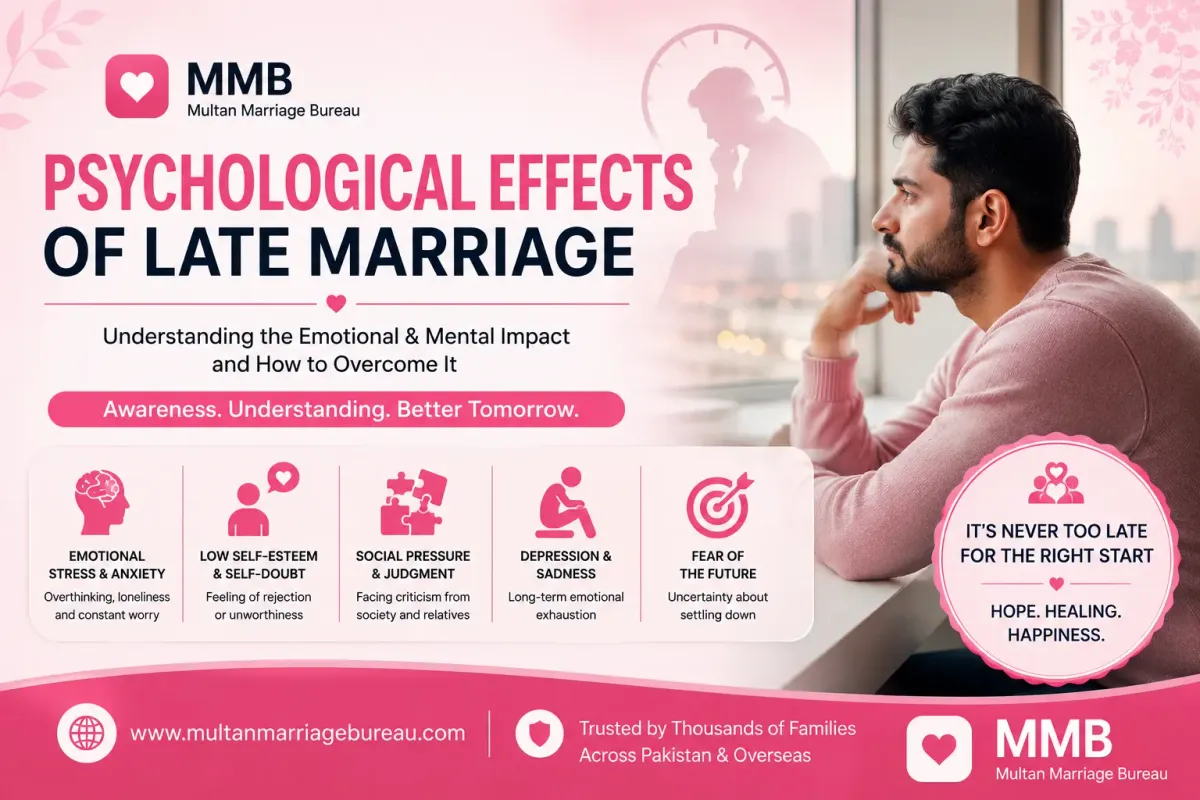
Late marriage is increasingly common in Pakistan — driven by education, careers, finances and changing family expectations. But how does it affect mental wellbeing? The honest, research-backed answer is more nuanced than the usual assumption that “marrying late is harmful.” The key finding: whether late marriage feels positive or painful depends heavily on whether it was your choice.
The most important finding: chosen vs forced delay
Research on delayed marriage in Pakistan found that people who voluntarily chose to marry later reported significantly higher life satisfaction and psychological wellbeing — and lower hopelessness — than those whose delay was due to circumstance or social pressure. In other words, late marriage itself isn't the problem; the stress, pressure and lack of control around it are what harm mental health.
Common psychological effects of late marriage
When delay is unwanted or comes with heavy social pressure, studies link it to:
- Anxiety and stress — from repeated questions and family expectations.
- Loneliness and social isolation — feeling “left behind” as peers marry.
- Low self-esteem — internalising stigma or self-doubt.
- Depressive feelings — especially where marriage is tied to social belonging.
The positive side of marrying later
Late marriage also brings real advantages, and research confirms them: more time for education and career, greater financial stability, stronger self-reliance, and often greater emotional maturity entering marriage. People who marry later — by choice — frequently build stable, satisfying marriages.
How late marriage affects men and women differently
In Pakistan's cultural context, women often face more direct social pressure, stigma and questions about fertility, which can weigh on self-worth. Men may struggle with expectations around financial readiness and “providing” before marriage. For both, higher education and financial independence tend to soften the negatives and increase confidence.
How to protect your wellbeing during the search
- Reframe the timeline as your choice, not a failure — this alone improves wellbeing.
- Set gentle boundaries with relatives who pressure or question you.
- Focus on compatibility and character, not rushing to “catch up.”
- Use a private, respectful search so you feel in control (not on display).
- Seek support from trusted friends, family, or a counsellor if stress builds.
Marrying at the right time — with the right person — matters far more than marrying at a young age with the wrong one.
A calmer, more private way to find the right match
A big part of the stress around late marriage is feeling rushed or exposed. A private, verified search puts you back in control. Multan Marriage Bureau lets you search verified profiles discreetly, with AI matching to focus on compatibility — so you can take your time and find the right person, not just any person.
Frequently Asked Questions
Is late marriage bad for mental health?
Not inherently. Research shows people who choose to marry late report higher wellbeing, while those delayed by pressure or circumstance face more stress and anxiety. The pressure — not the timing — is the main issue.
What are the benefits of marrying later?
More time for education and career, greater financial stability, stronger self-reliance, and often more emotional maturity — which can lead to a stable, satisfying marriage.
How can I handle family pressure about marrying late?
Set gentle boundaries, reframe your timeline as your own choice, focus on compatibility over speed, and use a private search so you feel in control rather than on display.
Does late marriage affect men and women the same way?
Not exactly. Women often face more social stigma and fertility-related pressure; men face expectations around financial readiness. Education and independence help both.
Note: This article is for general awareness and is not a substitute for professional mental-health advice. If you are struggling, please reach out to a qualified counsellor.
Find the right person, at the right time
There is no “too late” for a happy, blessed marriage. Search calmly, privately and on your own terms. Create your free profile on Multan Marriage Bureau, or read our guide on finding a genuine, verified rishta.